
In the LED lighting industry, a parameter called THD often appears in many lighting fixture specification sheets. While this metric may be unfamiliar to the average consumer, THD is a very important electrical parameter in lighting fixture manufacturing, engineering projects, and electrical design.
This is especially true in large-scale lighting systems, such as those found in shopping malls, office buildings, or factories. If a large number of luminaires have excessively high THD values, they can place an additional burden on the power grid and even compromise the stability of the entire electrical system. So, what exactly is THD, and why does it appear in LED driver specifications?
1. What is THD?
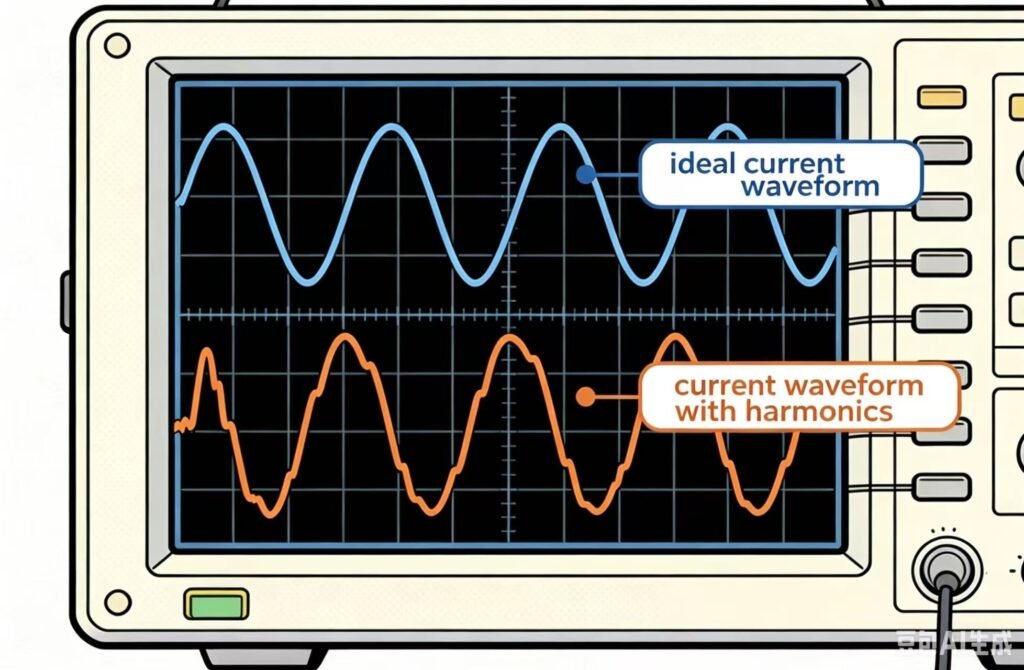
THD stands for Total Harmonic Distortion and is used to indicate the proportion of harmonic components in a current or voltage waveform. Ideally, the current waveform in a power grid should be a smooth sine wave. However, in actual electrical equipment, some electronic devices generate interference in the current waveform during operation, causing the originally smooth waveform to become distorted; these additional waveform components are referred to as harmonics.
The THD value is used to describe the degree of this waveform distortion,it is the metric that quantifies the proportion of these “excess” harmonic components relative to the total signal. A lower value indicates that the current waveform is closer to the ideal state, while a higher value indicates more pronounced harmonic distortion.
2. Why Do LED Drivers Generate Harmonics?
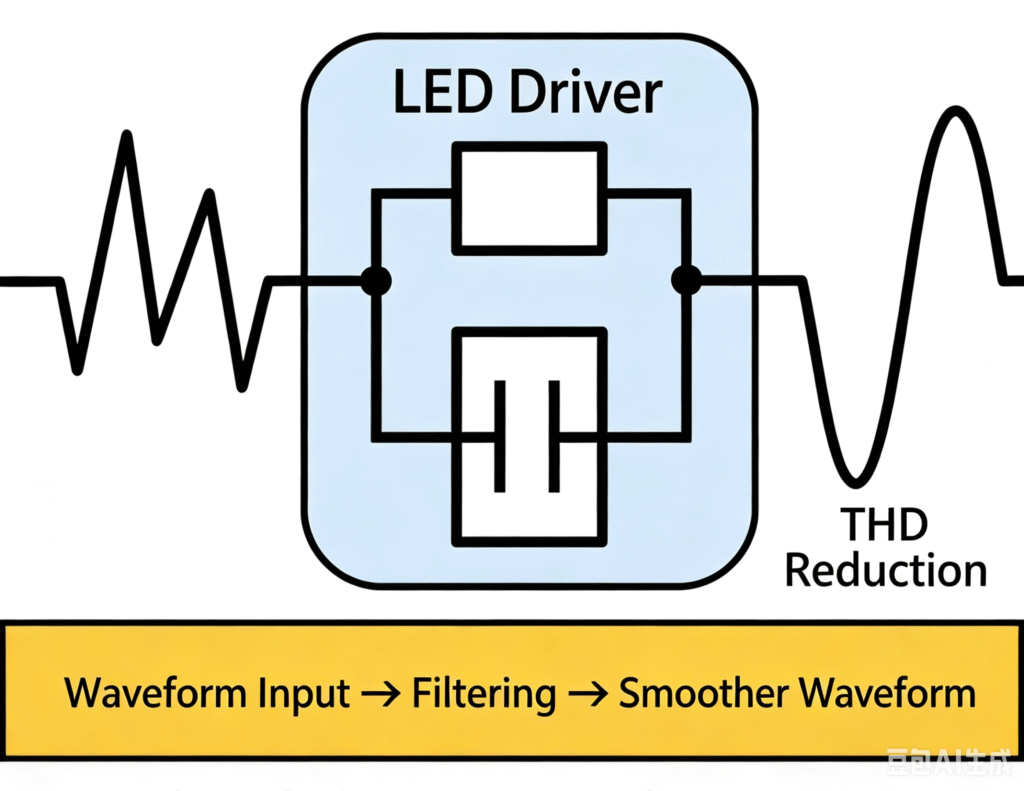
The reason LED lighting fixtures involve THD parameters is primarily related to the operating mode of the LED driver. LED drivers are switching power supplies that use electronic circuits to rectify and regulate current; this process can affect the current waveform in the power grid. If the driver is well-designed, the current waveform will closely resemble an ideal sine wave, resulting in a low THD value. However, if the driver design is relatively simple, the current waveform may exhibit significant distortion, leading to an increase in THD. Therefore, many lighting projects and electrical standards specify certain THD requirements for luminaires to minimize the impact of harmonics on the power grid.
3. Why is THD Important for LED Lighting
a. Impact on Power Quality
As non-linear loads, LED luminaires generate high-frequency current harmonics that are fed back into the power grid. The more LED luminaires on the same circuit, the greater the disturbance to the distribution system. These harmonics can cause:
- Transformer overheating: Harmonic currents increase both copper and iron losses in transformers
- Circuit breaker nuisance tripping: Harmonics can cause protective devices to malfunction
- Interference with other electronic devices: Harmonics affect the normal operation of other equipment on the same grid
b. Relationship with Power Factor (PF)
There is a close mathematical relationship between THD and Power Factor (PF):
The lower the THD, the higher the PF
The higher the PF, the lower the THD
Therefore, a good LED driver requires not only high Power Factor (PF) but also low THD. Both are indispensable.
4. The Impact of THD in Lighting Projects
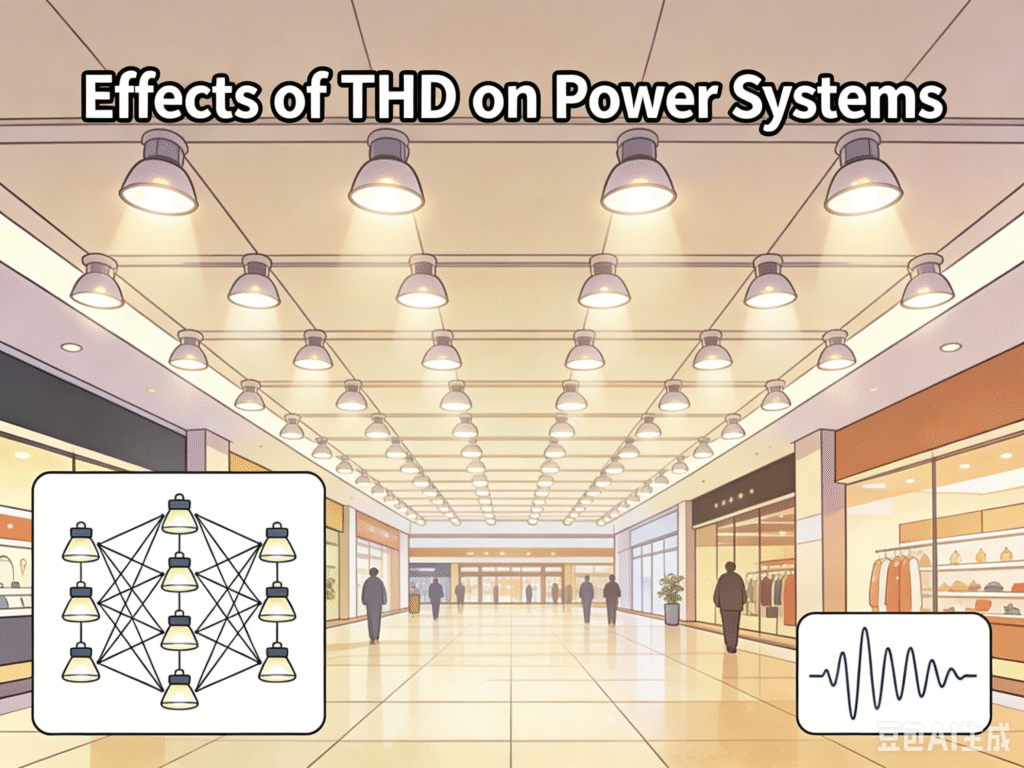
In a single light fixture, THD may not have a noticeable impact; however, in large-scale lighting systems, if a large number of devices generate harmonics simultaneously, this can place an additional burden on the power grid. For example, in large shopping malls, office buildings, or factory workshops, where hundreds or even thousands of LED lights operate simultaneously, excessively high THD in the drivers can increase power grid losses and may even affect the stable operation of other electrical equipment.
Therefore, in many professional lighting projects, specific THD requirements are set for the driver, such as THD less than 20% or even lower. This is why some high-quality LED drivers specifically emphasize “Low THD” (low harmonic distortion) in their technical specifications.
Summary
Simply put, THD indicates the degree of harmonic distortion in a current waveform. In LED lighting systems, THD is primarily related to the design of the driver. The lower the THD, the closer the current waveform is to the ideal state, and the smaller the impact on the power grid. Therefore, in some professional lighting projects or high-quality luminaires, a low-THD driver is often a key performance indicator.
So here’s the question.
When you purchase for lighting products, do you pay special attention to the THD specification? Or do you focus more on power, brightness, or the driver brand?
Feel free to share your experiences in the comments section.